DIY vs. Professional Insulation Removal in Ottawa: Making the Right Choice in 2026
Ottawa homeowners often face the dilemma of whether to tackle insulation removal themselves or hire professionals. With rising energy costs and the push for more efficient homes, upgrading attic insulation is a popular project. The temptation to save money with a DIY approach—renting equipment from a local store in Kanata, Orleans, or Gloucester—is strong. However, insulation removal is one of the most technically demanding and potentially hazardous home improvement tasks.
Professional insulation removal in Ottawa offers safety, efficiency, thoroughness, and peace of mind that DIY simply cannot match. At Bison Insulation, we’ve repaired numerous DIY mishaps and helped homeowners avoid health risks, structural damage, and wasted time. This detailed 2026 guide compares DIY versus professional insulation removal, breaking down the risks, costs, processes, and long-term outcomes so you can make an informed decision.
The Allure of DIY Insulation Removal—and Why It Often Backfires
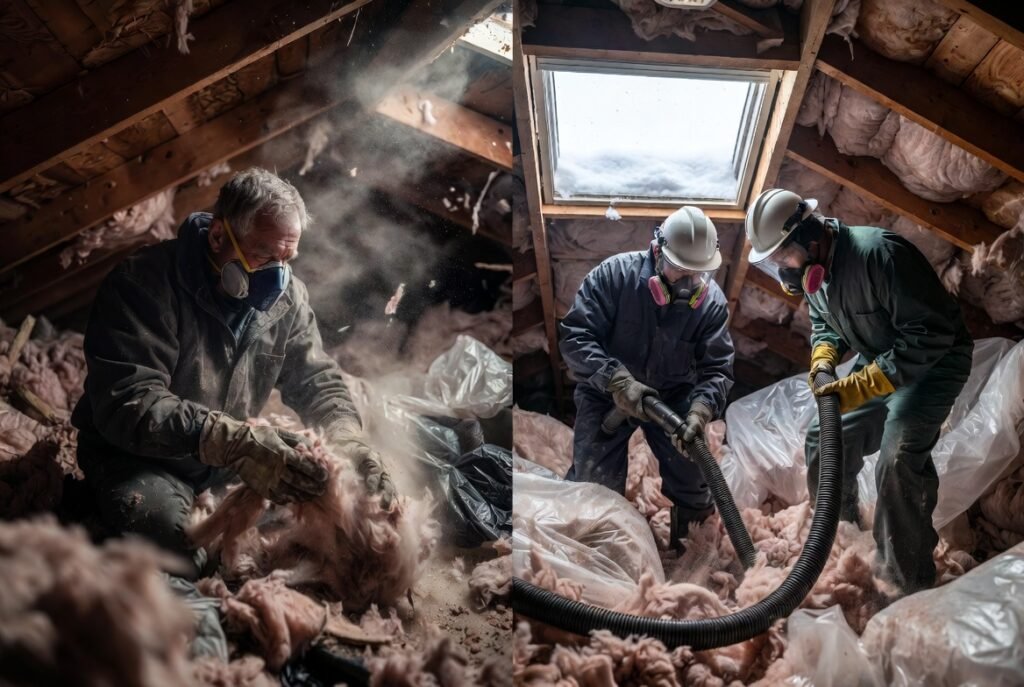
The DIY appeal is understandable: videos make it look straightforward, rental vacuums are available, and the perceived savings are significant. Many homeowners think, “How hard can sucking up old fluff be?”
In reality, insulation removal involves confined spaces, heavy dust loads, potential contaminants, and physical demands that quickly overwhelm unprepared individuals.
Common DIY Disasters We See in Ottawa Homes
- Dust contamination spreading through the entire house via the HVAC system.
- Incomplete removal leaving pockets of old material that cause uneven new insulation and persistent issues.
- Accidental damage to wiring, ductwork, or ceilings.
- Health complaints from exposure to fiberglass particles, rodent droppings, or mold spores.
Industry reports and contractor surveys consistently rank DIY insulation work among the top sources of accidental home damage and indoor air quality problems in Canada.
The Serious Asbestos and Vermiculite Risk in Older Ottawa Homes
One of the most compelling reasons to avoid DIY is the prevalence of hazardous materials in pre-1990 Ottawa homes.
Vermiculite and the Libby Mine Asbestos Contamination
Vermiculite, a lightweight expanded mineral used widely for attic insulation from the 1920s to the 1980s, was often sourced from a mine in Libby, Montana. Health Canada and the EPA confirm that a large percentage of this vermiculite contained tremolite asbestos—a highly dangerous fiber linked to mesothelioma and lung cancer.
When disturbed without proper controls:
- Asbestos fibers become airborne and can remain suspended for hours.
- Fibers settle on surfaces throughout the home and enter the HVAC system.
- The entire house may require expensive professional decontamination.
DIY enthusiasts rarely test for asbestos beforehand or possess the equipment for safe disturbance. Bison Insulation begins every project in older homes with certified laboratory testing of vermiculite samples. If asbestos is present, we implement full containment: negative air pressure machines, HEPA filtration, sealed zones, and licensed hazardous waste disposal—protecting both your family and our team.
The Massive Equipment Gap Between DIY and Professional Removal
Proper tools are essential for safe, efficient insulation removal.
Typical DIY Equipment Limitations
- Small-diameter hoses (2–3 inches) on rented shop vacuums that clog constantly.
- Underpowered motors that lose suction quickly and kick dust back into the attic.
- Manual bagging of material, requiring dozens of trips through the house.
These setups turn a one-day professional job into a multi-weekend ordeal, with frequent breakdowns and poor results.
Professional-Grade Equipment Used by Bison Insulation
We deploy commercial systems designed specifically for insulation removal:
- 15–23 horsepower gas-powered extractors mounted in our trucks outside the home.
- 4–6 inch reinforced hoses that maintain strong suction without clogging.
- High-volume sealed collection bins that capture material directly—no messy bags in your home.
- HEPA-filtered exhaust to prevent particle release.
This equipment removes insulation faster, cleaner, and with far less airborne dust—typically completing an average Ottawa attic in a single day.
Hidden Costs That Make DIY More Expensive Than Expected
While the upfront rental fee seems low, DIY hidden costs quickly add up.
Disposal and Regulatory Compliance
Ottawa and Ontario have strict rules for construction waste:
- Landfills require specific handling of insulation, especially if contaminated.
- Tipping fees are charged by weight—often $100–$300 per load.
- Vermiculite or moldy material may classify as hazardous waste with much higher fees.
Professionals include hauling and proper disposal in the quote.
Safety Gear and Protection
To work safely, you need:
- P100 or better respirators ($50–$100 each).
- Full Tyvek suits with hoods and booties.
- Safety goggles, gloves, and knee pads.
- Plastic sheeting and tape for containment.
These items easily exceed $200–$400 for a single project.
Repair Costs from Accidents
The most expensive hidden cost is damage:
- Stepping off a joist and putting a foot through drywall (common in Ottawa bungalows with narrow joists).
- Damaging electrical wiring or knocking ducts loose.
- Spreading contaminants that require professional cleanup.
Repairing a ceiling hole alone can cost $500–$1,500.
Physical Risks and Health Concerns of DIY Removal
Attics are hostile environments, especially in Ottawa’s older homes with low pitches and tight access.
Physical Dangers
- Working on narrow joists in extreme heat (summer) or cold (winter).
- Hauling heavy, itchy material in awkward positions.
- Risk of falls, heat exhaustion, or back injuries.
Our technicians are trained in confined-space safety and “attic gymnastics”—knowing exactly where to step and how to maneuver safely.
Health Exposure Risks
Fiberglass, cellulose dust, rodent droppings, and mold spores irritate lungs, eyes, and skin. Without proper respirators and containment, exposure can cause immediate reactions or longer-term issues. Rodent waste may contain hantavirus—a serious concern in rural Ottawa areas.
Why Professional Removal is Essential Before Upgrades
Many homeowners remove insulation to prepare for better materials. DIY partial or contaminated removal undermines these investments.
Preparing for Spray Foam
Spray foam requires an absolutely clean substrate. Residual dust or fibers prevent proper adhesion, leading to voids and failure. Professional removal ensures surfaces are spotless for optimal performance of spray foam insulation in Ottawa.
Achieving Full R-Value with Blown-In
Uneven or incomplete removal leaves low spots that compress new blown-in material. Thorough professional removal allows uniform installation of blown-in insulation in Ottawa to code-recommended R-60 levels.
Comprehensive Attic Improvements
Professionals spot and address related issues—leaks, poor ventilation, mold—during removal. We often integrate mold removal in Ottawa when needed.
The Bison Insulation Professional Process: Safety and Efficiency Built In
Our proven approach minimizes disruption and maximizes results:
- Free Assessment and Testing: We evaluate insulation type, condition, and test for hazards.
- Home Protection: Drop cloths, sealed zones, and negative air machines contain dust.
- Efficient Removal: Industrial equipment clears the attic quickly and completely.
- Air Sealing and Repairs: We seal penetrations and address issues discovered.
- Thorough Cleanup: Your home is left cleaner than before, with photo documentation.
- Seamless Transition: Ready for new attic insulation in Ottawa or other upgrades like floor insulation in Ottawa.
When DIY Might Be Acceptable (Rare Cases)
Very small, accessible, modern attics with clean fiberglass batts (not blown-in or vermiculite) and no contamination might be manageable for experienced DIYers with proper precautions. Even then, professionals usually complete the job faster and better.
For 99% of Ottawa homes—especially older bungalows, two-stories, or those with any signs of pests, mold, or vermiculite—professional removal is strongly recommended.
Conclusion: Protect Your Health, Home, and Investment
While DIY insulation removal might seem like a money-saver, the risks to health, home integrity, and future efficiency far outweigh any short-term savings. Professional removal by an experienced team like Bison Insulation ensures the job is done safely, thoroughly, and correctly—preparing your home perfectly for energy-saving upgrades.
Don’t gamble with hazardous materials or difficult conditions. Visit our homepage or contact us today for a free assessment and transparent quote on professional insulation removal in Ottawa. Your family’s health and your home’s performance deserve the professional approach.